
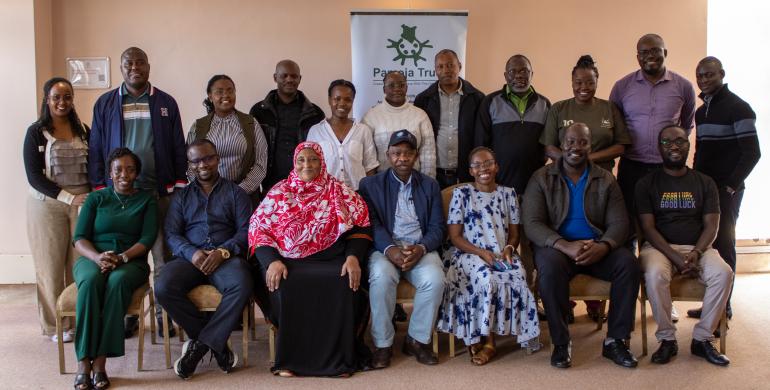
On June 3 – 4, 2026, the Utafiti Sera on Urban Governance and City Transformation House, hosted by Pamoja Trust, convened a national policy dialogue on the Planning Laws (Miscellaneous Amendment) Bill, 2026. The convening brought together practicing planners, officials from the State Department of Housing and Urban Development, county and municipal authorities, the Kenya Institute of Planners, academics from institutions including Kenyatta University, Technical University of Kenya, civil society organisations, development partners, and community representatives from informal settlements across Kenya.
The Bill seeks to harmonise three pieces of legislation: the Physical and Land Use Planning Act (PLUPA), the Urban Areas and Cities Act (UACA), and the County Governments Act (CGA), while strengthening planning institutions and practice. The review is a significant opportunity: Kenya’s counties and cities have grown faster than the systems meant to plan for them, leaving gaps in how planning law treats community participation, devolved governance, implementation and accountability.
Five foundational issues
The dialogue’s output, a policy brief titled Strengthening Inclusive and People-Centred Planning in Kenya, submitted to the Bill’s Technical Committee, organises its argument around five issues drawn from years of Utafiti Sera House practice and evidence, including the Strategic Planning Framework, the Social Planning Reader and the Adaptive Settlement Planning Model (ASPM):
- Planning as a people-centred process – Communities already generate knowledge through participatory mapping, social enumeration and settlement profiling long before planners arrive and that knowledge should formally inform planning decisions, not sit outside them.
- Public participation beyond procedural compliance – Reliance on Gazette notices and one-off consultation forums often excludes low-income communities, informal settlement residents, women, youth and persons with disabilities. Participation needs to run through preparation, implementation and monitoring not stop once a plan is approved.
- Devolution and local planning structures. Village units and village councils, established under the County Governments Act, have an unclear role in formal planning processes. Strengthening that link would make planning more responsive to realities at the neighbourhood and village level.
- Implementation, accountability and resource alignment. Plans too often disconnect from budgeting and financing decisions, with limited mechanisms for tracking whether planned interventions are actually delivered.
- Conflict resolution, transparency and planning governance. Planning decisions on land use, upgrading and infrastructure frequently generate disputes, and existing grievance mechanisms such as Liaison Committees are not always accessible or effective at resolving them early.
From issues to specific legislative proposals
The brief translates these issues into specific, clause-level amendments. Among them:
- Requiring statutory survey reports under PLUPA to take into account community-generated data and locally validated evidence collected through participatory planning processes.
- A new requirement for all draft and approved plans: national, county, city, municipal, town and local to be published on an open-access, searchable digital platform for the duration of the plan’s life cycle.
- Mandatory stakeholder meetings in every ward, including representatives of village units, before a county physical and land use development plan is finalised.
- A new clause requiring mechanisms for communities and village-level structures to participate in monitoring the implementation of approved county plans.
- Allowing registered communities or neighbourhood associations to request that a county planning authority initiate a City, Municipal, Town or Local plan rather than planning remaining something only authorities can start.
- A new planning principle committing physical and land use planning to promote spatial justice and the fair distribution of development benefits and burdens.
- Strengthening the mandate of County Physical and Land Use Planning Liaison Committees to include alternative dispute resolution, not only hearing appeals after decisions have already been made.
Why this matters
Taken together, the recommendations point toward one underlying shift: recognising communities not simply as beneficiaries of planning decisions, but as initiators, co-creators and stewards of planning processes. As the brief’s conclusion puts it, planning is “not only about regulating land and guiding development”, it is also about shaping the relationship between people, places and institutions.
Pamoja Trust thanks fellow Utafiti Sera House members, academic institutions, representatives from the State Department and all participants who contributed to the dialogue and the brief, as well as PASGR and Misereor for their continued support of this work.